Still, don’t take your air for granted just because the street is wet. Fine particles can hang around after a shower, and ozone can rebuild by the next sunny afternoon. A spring thunderstorm can even make the air rougher for a few hours on anyone at home with allergies or asthma. Here’s how I read air quality in Columbus Ohio after the rain, so you can tell a true improvement from a fresh-smelling false alarm.
TL;DR Quick Answers
air quality Columbus Ohio
Air quality in Columbus, Ohio is usually good to moderate, but two pollutants cause most bad days. Ground-level ozone climbs on hot, sunny afternoons from spring through fall, and fine PM2.5 spikes during winter inversions and wildfire smoke. Franklin County earned an F for short-term particle pollution in the 2026 “State of the Air” report.
Check it live: The AQI updates hourly and reports whichever pollutant is worst at that moment.
Know the alert line: MORPC issues a Central Ohio Air Quality Alert when the AQI tops 100.
Read the season: Ozone drives the summer alerts, while PM2.5 drives winter and smoke days.
Protect your indoor air: Keep windows shut on alert days and run a clean furnace filter. After a soaking rain, open up once the reading turns green.
Top Takeaways
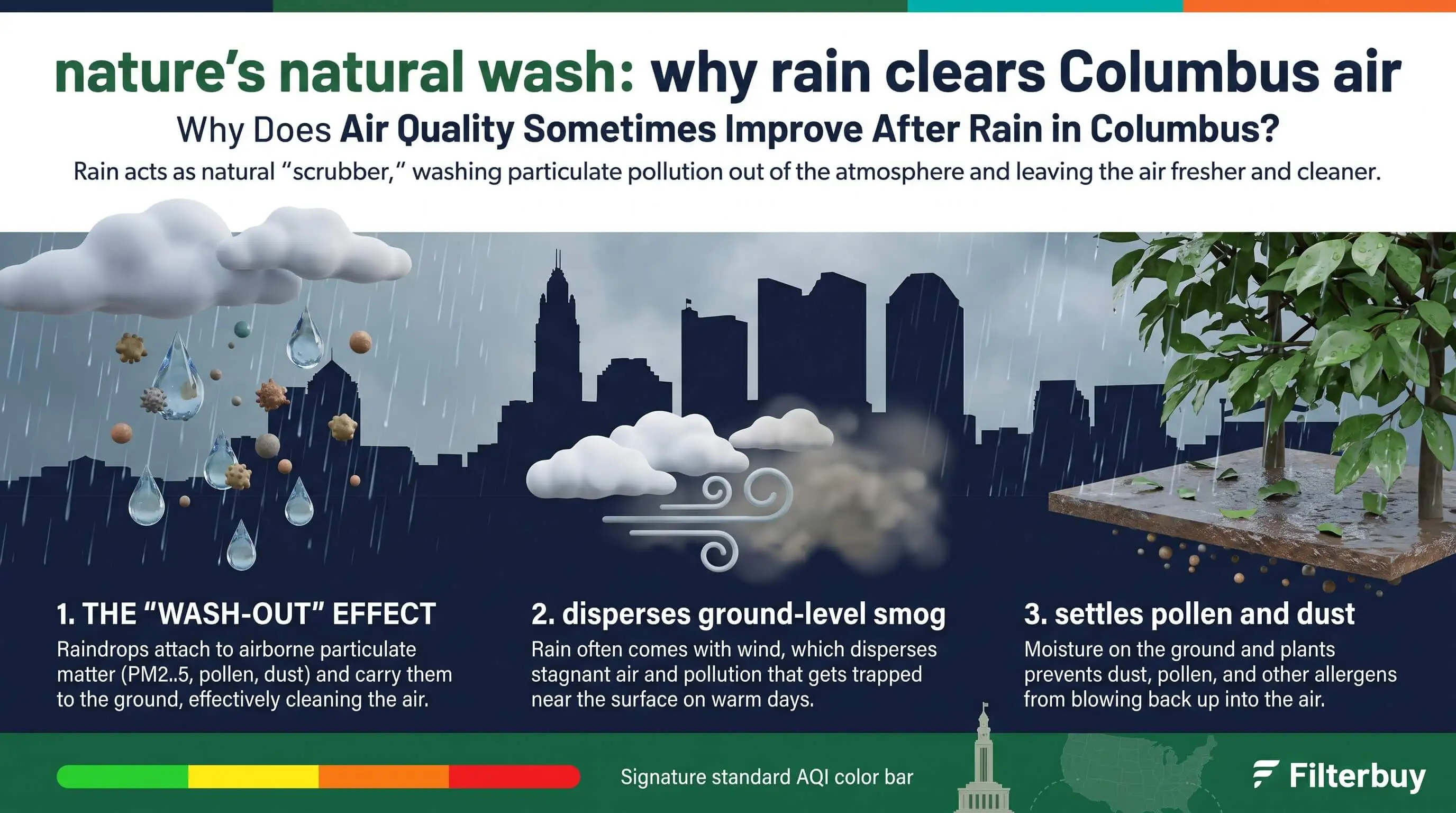
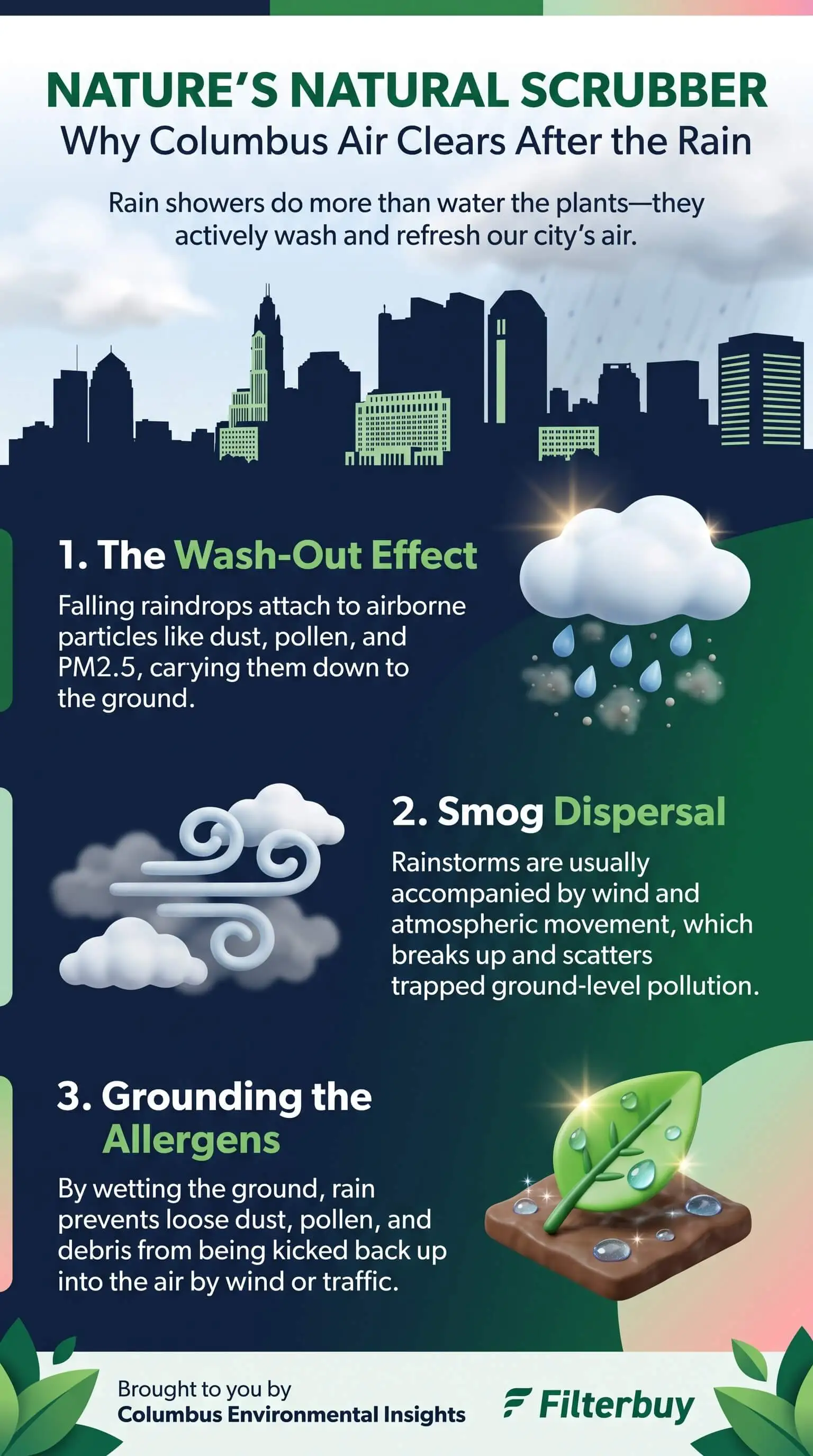
A good rain usually leaves Columbus air cleaner by washing particles to the ground.
Gray, cool, rainy weather slows ground-level ozone, which needs heat and sunlight to form.
Fine PM2.5 is the toughest pollution for rain to catch, and Franklin County’s short-term particle spikes earn an F.
Pollen-season thunderstorms can shatter pollen into fragments that reach deep into the lungs.
Check the live AQI before opening windows, and hold indoor humidity between 30 and 50 percent.
How Rain Cleans the Air Over Columbus
Raindrops Pull Particles Out of the Air
Scientists call this wet deposition, and it’s simpler than it sounds. Each falling drop collides with dust, soot, and pollen and carries them to the ground, along with gases that dissolve in water. A steady rain keeps at it for hours. That’s why the morning after so often looks scrubbed clean.
Big particles get caught first. The finest ones, called PM2.5, slip past raindrops more easily, so a downpour clears coarse dust faster than the tiny particles that travel deepest into your lungs. This is why relying on rain or natural air filters alone may not be enough to reduce exposure to fine particle pollution.
Clouds and Cooler Air Slow Ozone
Nothing pumps ground-level ozone straight out of a tailpipe. It forms when pollutants from cars and industry react in heat and sunlight, so a gray, rainy day takes away both ingredients. Central Ohio’s worst ozone days are hot, still summer afternoons. Rain usually knocks down the ozone side of the Air Quality Index, the 0 to 500 scale on your local forecast.
Cold Fronts Flush Out Stagnant Air
Sometimes the weather system does more than the raindrops. On a June 2025 alert day, the Mid-Ohio Regional Planning Commission (MORPC) noted that the next day’s cold front would bring clouds and showers with limited ozone development. A front swaps a tired, polluted air mass for a fresh one. The rain is simply the part you can see.
When Rain Doesn’t Clear the Air
Some showers barely move the number.
Light drizzle: Brief or misty rain doesn’t have enough drops to catch much.
Fine particles: PM2.5 from traffic on I-70, I-71, and I-270 slips past raindrops with ease.
Quick sunshine: On a hot day, ozone can start building again by mid-afternoon once the clouds break.
Smoke overhead: Wildfire smoke from Canada or the western United States can ride above the rain and settle in after the storm moves on.
When Air Quality Gets Worse After Rain
Thunderstorms and Pollen Fragments
A thunderstorm is a different animal from a gentle rain. Its downdrafts can pull pollen and mold spores into wet, turbulent clouds, where moisture and wind shatter them into tiny fragments. Gusty winds then push those fragments out ahead of the storm. Your nose usually stops whole pollen grains. The fragments get past it and reach deep into the lungs. One 2016 event in Melbourne, Australia, affected thousands of people at once. Locally, spring and early summer carry the most risk.
Humid Heat Rebuilds Ozone
Columbus summer storms often leave the air so thick and steamy that your glasses fog on the walk to the car. Once the clouds clear, sunshine restarts ozone production, and pollen tends to climb on humid days as well. You can get rained on at breakfast and still see an Air Quality Alert by dinner.
Damp Homes and Mold
Rain changes your indoor air too. Water finds its way into basements, and humid air helps mold and dust mites thrive. The EPA recommends keeping indoor humidity below 60 percent, ideally between 30 and 50 percent, so mold can’t get a foothold. Proper air conditioning helps control excess indoor moisture and maintain healthier humidity levels.
Reading the Columbus AQI After a Storm
The AQI reports whichever pollutant is the worst at the moment. In summer that’s usually ozone, while fine particles take over in winter and during smoke events. Because the reading leans on a weighted average of recent hours, it can trail the sky by an hour or more after a storm. Once the index tops 100, MORPC issues an Air Quality Alert for Central Ohio, since the air has turned unhealthy for sensitive groups.
Pro Tip: Before you throw the windows open after a storm, check the live Columbus map listed first in the resources below. If it reads green and pollen is low, enjoy the breeze. If not, let your furnace filter carry the load.
What I Do Indoors After Rain in Columbus
Ventilate on green days: I open windows when the AQI sits at 50 or below and pollen counts are moderate or low.
Close up during spring storms: Windows stay shut during and right after pollen-season thunderstorms if anyone at home has allergies or asthma.
Check the filter: A clean, properly rated furnace filter catches the pollen and fine particles that sneak indoors.
Watch the basement: A dehumidifier after heavy rain keeps humidity in that 30 to 50 percent range.
“I’ve watched an evening thunderstorm knock Central Ohio’s ozone down overnight, then seen it climb right back by the next hot afternoon. Rain gives you a fresh start, but heat and sunshine start the clock again, so I tell families to trust the live reading before they trust the smell.”
7 Essential Resources
Live Air Quality Map for Columbus, Ohio: Columbus, OH live AQI map. Hourly readings and the dominant pollutant show whether the rain actually helped.
MORPC Air Quality Alert, June 8, 2025: Central Ohio alert release. A local example of a cold front and showers holding ozone down, with free alert sign-up.
EPA Ground-Level Ozone Basics: How ozone forms. Why heat and sunlight drive ozone, and why cloudy weather slows it.
National Weather Service, Clearing the Air on Weather and Air Quality: NWS weather and air quality. How rain, wind, and air mixing shape pollution levels.
NOAA Atmospheric Inputs Tutorial: Wet and dry deposition. A plain-language look at how rain and snow wash pollutants from the air.
Asthma and Allergy Foundation of America, Weather Triggers: Weather and asthma. Covers thunderstorm asthma along with humidity and mold triggers.
Ohio EPA, Ohio Air Quality 2024: Statewide air quality report. Statewide monitoring data and ozone trends by county.
3 Statistics
Storm days sent more people to the ER: Researchers reviewing records from three Wichita, Kansas hospitals between 2020 and 2024 counted an average of 17.91 asthma emergency visits on thunderstorm days, compared with 3.09 on days without storms. ACAAI study release
Millions of people feel these swings: About 27.8 million people in the United States had current asthma in 2023, including roughly 4.8 million children. CDC asthma data
Particle spikes are the bigger local problem: The American Lung Association’s 2026 “State of the Air” report gave Franklin County an F for short-term particle pollution, with 4.8 unhealthy days a year, and ranked the Columbus metro 34th worst in the nation. American Lung Association Ohio report
Thunderstorms can trigger sharp increases in asthma-related emergencies, affecting millions of Americans living with asthma, while Franklin County faces recurring particle pollution spikes. Alongside monitoring air quality alerts, regular HVAC tune-ups help homeowners maintain proper airflow and indoor air filtration during periods of poor air quality.
Final Thoughts
I’ll be honest. The fresh smell after a storm is a good sign and a lousy measuring tool. Rain does serious work over Columbus, washing out dust and pollen while it cools down the ozone engine, and it often rides in on a front that sweeps stagnant air away. The pollution that matters most for our lungs, though, is the fine stuff rain struggles to catch. A pollen-season thunderstorm can also make breathing harder for a few hours.
So when it rains, I check. A quick look at the live reading makes the invisible visible and puts you in charge of the air your family breathes. Pair that awareness with high quality filters to help maintain cleaner air inside your home.
Frequently Asked Questions
Is the air cleaner in Columbus after a thunderstorm?
Usually, though not right away. A thunderstorm washes out dust and lowers ozone, but in pollen season it can also spread fine pollen fragments for several hours. With allergies or asthma at home, wait for a green reading before long stretches outdoors.
How long does air stay clean after rain?
That depends on what follows the rain. Behind a cold front with cool, breezy air, cleaner conditions can last a day or more. When hot sunshine returns fast, ozone can rebuild by the next afternoon, and traffic particles start piling up again within hours.
Does snow clean the air like rain does?
Yes. Falling snow captures particles through wet deposition. Columbus winters bring their own problems, though. Cold, still nights trap fine particles near the ground, so check the AQI on calm mornings even after a fresh snowfall.
Why do my allergies flare up after it rains?
Moisture can burst pollen grains into smaller pieces, and thunderstorm winds scatter them widely. Rain also raises humidity, which helps mold and dust mites grow indoors. Shutting windows during storms and keeping humidity in check both make a difference.
Should I open my windows after it rains in Columbus?
Open them when the live AQI reads 50 or below and pollen is low, which often happens the morning after a soaking rain. Keep them shut during pollen-season storms or on hot afternoons when ozone climbs, and let your HVAC system do the work.
Check the Air Before You Open the Windows
Rain often hands Columbus a cleaner start, and knowing when it truly improves the air lets you protect everyone breathing inside your home. Take a quick look at today’s reading, match your windows and filter to it, and breathe easier on every fresh-air day the weather sends your way. Using MERV 8 pleated furnace air filters helps capture everyday airborne particles and maintain cleaner indoor air between those fresh-air days.